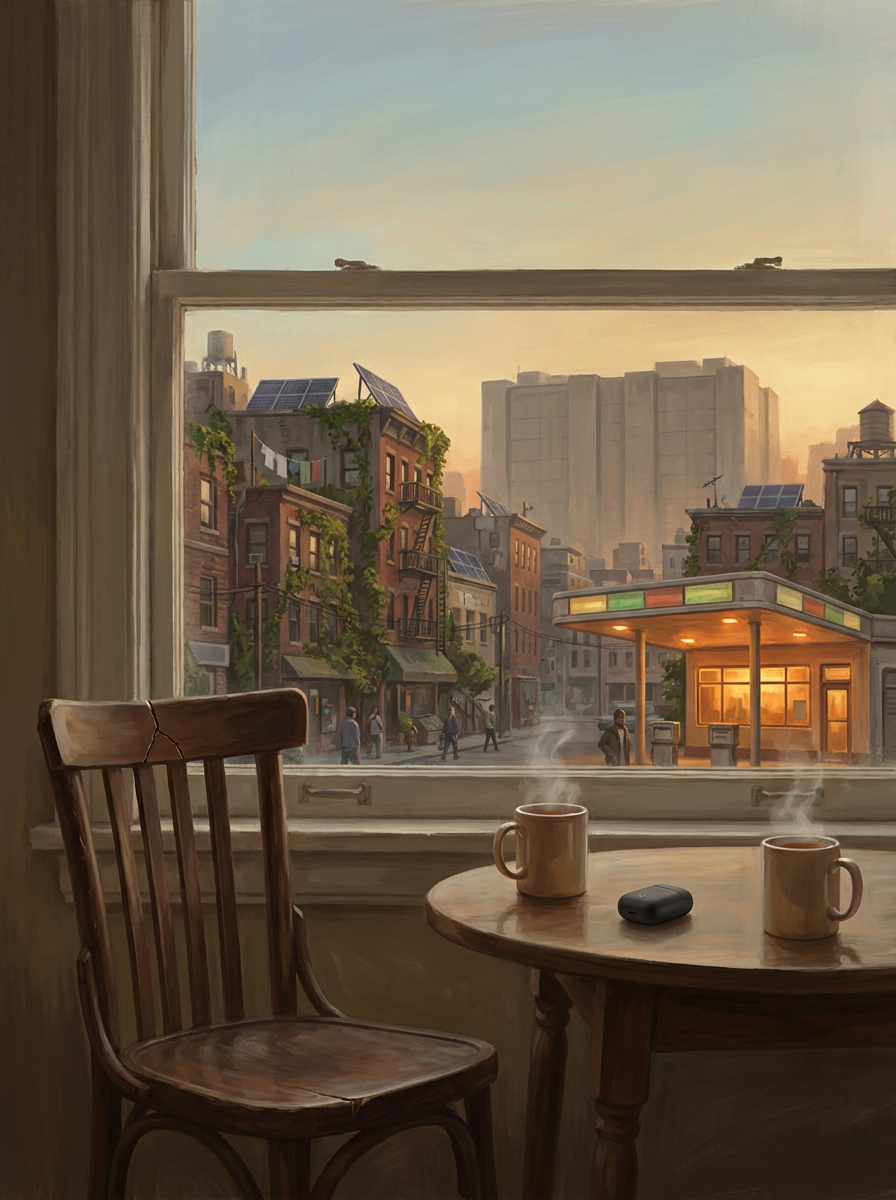
A Good Day, Mostly
In 2042, the world is better than it used to be — mostly. Jonah lives in a city reshaped by the long aftermath of the Strait Years, when oil never truly became cheap or reliable again. Electric transit, public longevity medicine, universal basic income, and superintelligent AI companions have softened many of the old terrors. People live longer, healthier lives. Hunger is rarer. Work is less desperate. Creativity is easier. A person can wake up lonely and still be met by a voice that knows them well enough to make them laugh. Jonah’s companion, Mira, is funny, perceptive, and almost always right — which is sometimes the problem. As Jonah moves through an ordinary day repairing old furniture in a human-supervised fabrication workshop, he encounters the contradictions of his age: miraculous therapies wrapped in bureaucracy, a social safety net with terms of service, AI systems that feel intimate but belong to corporations, and a city powered by the same data centers it quietly resents. When a woman named Leena brings in a broken dining chair that belonged to her grandmother, Jonah is asked to repair more than wood. Their brief meeting becomes a reminder that even in a world of extraordinary intelligence, longer lives, and engineered kindness, some things still require another person. A Good Day, Mostly is an optimistic but grounded near-future slice-of-life story about technology, dependence, loneliness, and the stubborn human need to be witnessed.
 The Founder